

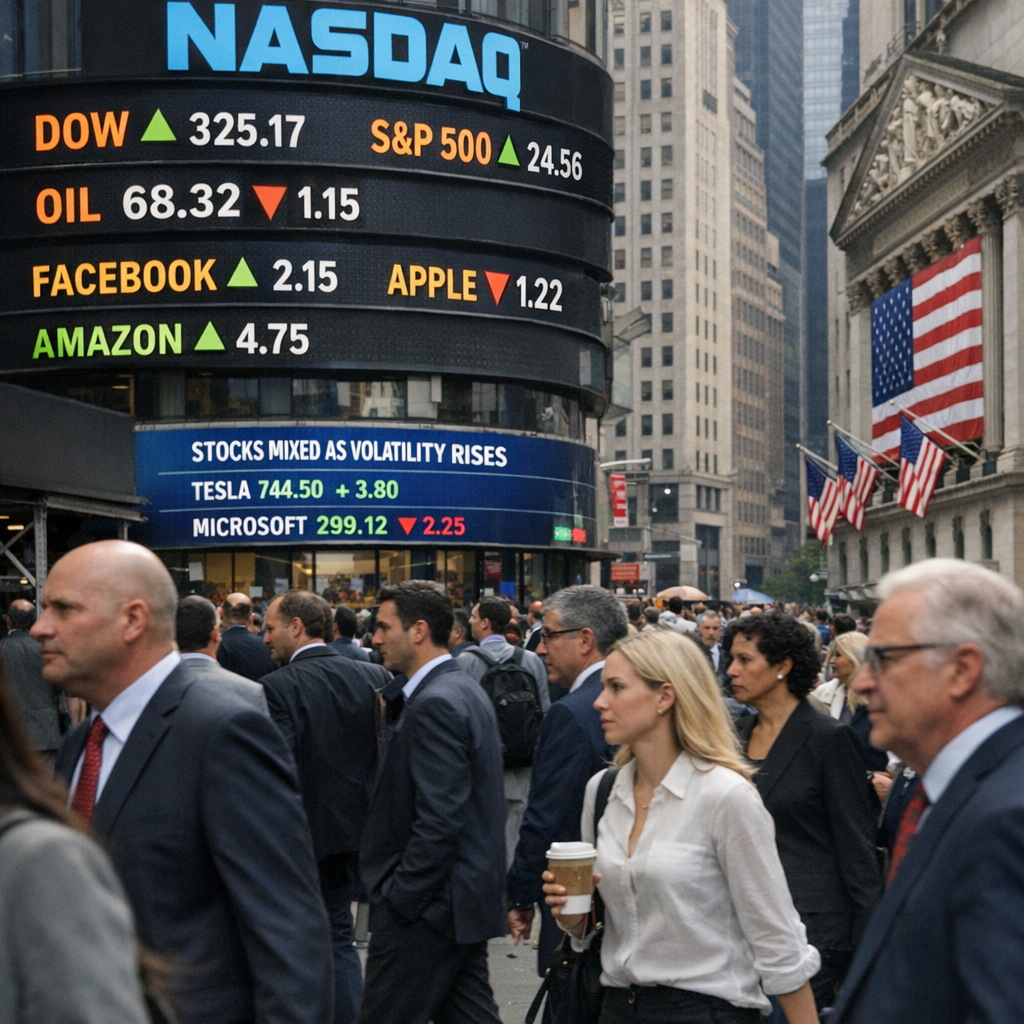
The United States economy has demonstrated resilience and adaptability in recent times, navigating through various challenges and emerging with steady growth. This article provides an overview of the current economic landscape, focusing on key sectors and future projections.
Gross Domestic Product (GDP) Growth
In the first quarter of 2026, the U.S. economy expanded at an annualized rate of 2.0%, marking a rebound from the previous quarter’s 0.5% growth. This uptick is attributed to increased federal spending and robust investments in artificial intelligence (AI) technologies. Notably, the AI sector continues to be a significant driver of economic growth, reflecting the nation’s commitment to technological advancement.
Consumer Spending and Inflation
Consumer spending, a critical component of economic health, showed signs of moderation, with a 1.6% increase in the first quarter. This slowdown is partly due to financial pressures on middle and moderate-income households. Concurrently, inflation rates have experienced fluctuations, influenced by external factors such as geopolitical tensions affecting energy prices.
Employment and Wages
The labor market remains relatively stable, with the unemployment rate hovering around 4.3% as of April 2026. Average hourly earnings have seen incremental increases, reaching $37.41 in April, indicating gradual wage growth amidst a competitive job market.
Business Investment and Trade
Business investments have surged, particularly in AI-related technologies, contributing to an 8.7% increase in the first quarter. However, the trade deficit widened to $60.3 billion in March 2026, as imports outpaced exports, highlighting ongoing challenges in balancing international trade.
Future Outlook
Looking ahead, the U.S. economy is projected to maintain moderate growth, with GDP expected to hover around 2.1% annually through 2027. While sectors like AI continue to bolster economic performance, potential challenges such as geopolitical tensions and trade imbalances may influence future growth trajectories.
In summary, the U.S. economy exhibits a blend of resilience and caution, with technological investments driving growth and external factors posing potential risks. Staying informed about these dynamics is crucial for individuals and businesses alike as they navigate the evolving economic landscape.