

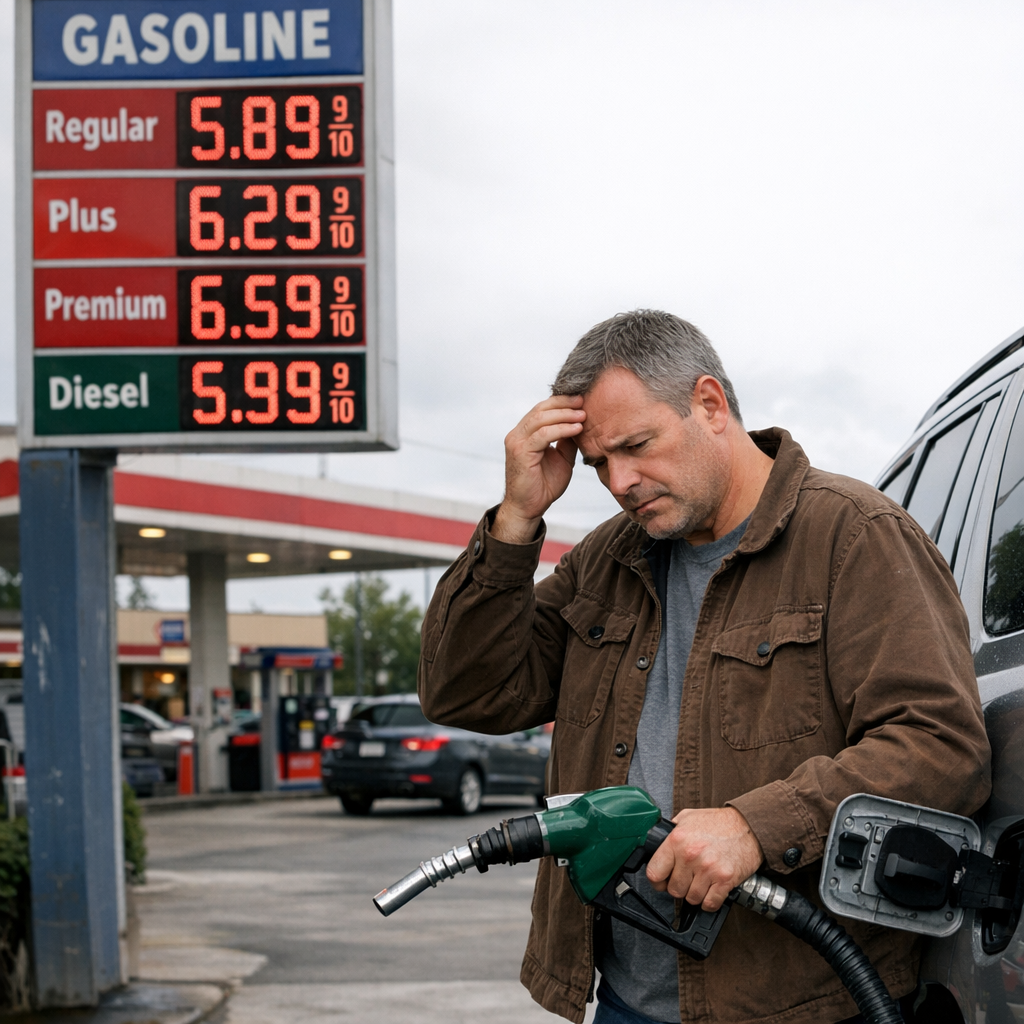
As the United States continues its military engagement in Iran, domestic economic challenges are becoming increasingly pronounced. Recent data indicates a significant rise in inflation, with the Consumer Price Index (CPI) climbing 3.8% in April 2026. This uptick is largely driven by escalating energy costs, notably gasoline prices, which have surged above $4.50 per gallon nationally. In some states, prices have even exceeded $5 per gallon.
The ongoing conflict has disrupted global oil supplies, particularly due to the closure of the Strait of Hormuz, a critical passage for oil shipments. This disruption has led to a 5.4% increase in gasoline prices in April alone, contributing to a 28% year-over-year rise. Consequently, many Americans are finding that their incomes are not keeping pace with rising prices, effectively eroding recent wage gains.
Public sentiment reflects growing dissatisfaction with the current economic trajectory. A recent CBS News/YouGov poll reveals that 70% of Americans feel “angry” or “frustrated” about the administration’s handling of the economy. Only 11% expressed enthusiasm, and 19% reported satisfaction. Additionally, 65% of respondents believe that current policies are worsening the economy in the short term, with 50% concerned about long-term impacts.
In response to these challenges, the administration has proposed measures such as suspending the federal gas tax to provide temporary relief at the pump. However, such proposals face significant hurdles in Congress and have yet to be implemented. Meanwhile, negotiations with Iran remain stalled, prolonging the conflict and its associated economic repercussions.
As the nation approaches the midterm elections, economic issues are taking center stage. Voters are increasingly concerned about their financial well-being, and the administration faces mounting pressure to address these economic challenges effectively. The coming months will be crucial in determining the nation’s economic direction and the political landscape moving forward.